For the most current information and resources on climate change, check out HRW's Environment Division
This toolkit will not be updated after Spring 2026.
Article 26 of the Universal Declaration of Human Rights states every person has a human right to education and that "education shall be directed to the full development of the human personality and to the strengthening of respect for human rights and fundamental freedoms..." (UDHR)
The Convention on the Rights of the Child article 28 states that governments should "ensure that school discipline is administered in a manner consistent with the child's human dignity..." (CRC)
STF Chapters are working with administrators, teachers, students and parents to develop a Student Bill of Responsibilities and Rights that will help their schools become more human rights friendly. STFers will accomplish this by:
- Building coalitions on campus to ensure all aspects of the school community are represented;
- Identifying which issues are of most concern to students and educators on campus; and
- Garnering support from school decision-makers to ensure that our schools uphold the human rights of our current and future classmates long after we graduate.
Click on each tab for information and resources:
For Students
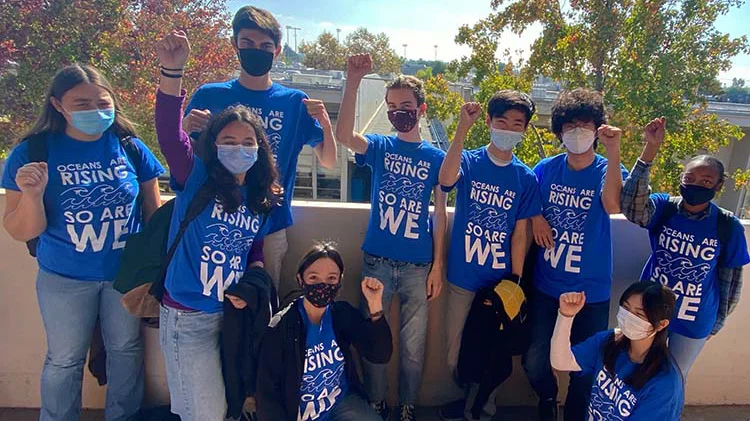
These student activities are designed to be led by students for campus and community education efforts in and outside the classroom. These activities empower students to take action and educate the next generation of decision-makers, building a movement of advocates fighting for human rights.
For Teachers
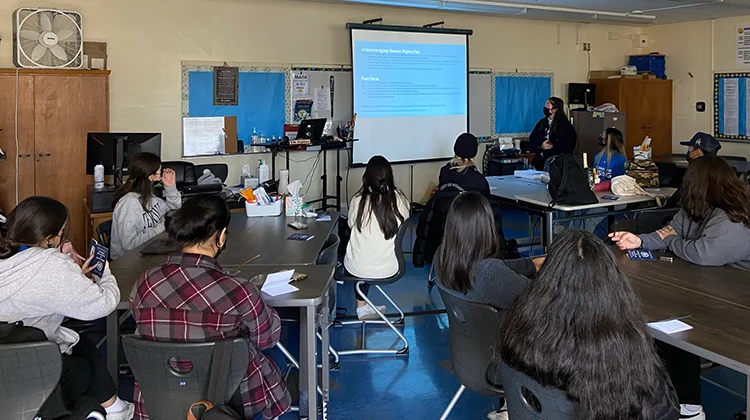
Teachers can use these lessons to embed climate change education in high school classrooms across subject areas. They are a starting point and can be used as one-time lessons or part of a unit. There are also recommendations for embedding human rights in lessons plans and activities.
Tell Us: Is Climate Change Education Happening At Your School?
The Human Rights Watch Student Task Force is conducting a curriculum audit to find out what course materials are currently taught at your school related to the climate crisis. Our goal is to promote human rights-focused curriculum that gives students a tangible connection to the scientific, social, historical, and literary lenses of climate change as it affects the life and well-being of humanity.

Climate Change Education: The Human Rights Lens
The climate crisis is the defining issue of our time and we are at a monumental moment. If governments fail to take aggressive and targeted action to fight climate change, people’s human rights, including to life, education, health, food, and water, will suffer catastrophically. The best way to fight the human rights impacts of the climate crisis is to make sure everyone is educated about them.
Here are some ways to embed a human rights lens into these (and other) lessons and activities related to climate change:
- When in doubt, refer back to the simple version of the Universal Declaration of Human Rights to get specific examples of which human rights are affected (or will be affected) by climate change.
- Example: Everyone has the right to an education. This human right can be easily discussed and integrated in every subject area!
- Example: You have the right to think and voice your opinions freely. This human right can be emphasized in group activities, Socratic seminar discussions, asking students to show their work in math problems, teaching the scientific method, etc.
- Look for the human impact of the environmental issue.
-
- Example: Ice caps melting leads to sea-levels rising which causes displacement, lack of access to education in areas with insufficient infrastructure, lack of access to health care, etc.
- Example: Deforestation of the Amazon rainforest impacts sacred lands of indigenous peoples.
-
- Consider intersectionality and how climate change might be part of a more complex story
-
- Example: Migrants from Central America travel north through Mexico to flee gang violence, corruption, lack of opportunity, and increased droughts, natural disasters, heat waves, etc. Such environmental factors lead to food insecurity, immigration discord, and exacerbate existing political and social challenges.
-
- If using data, reference the groups that might be excluded from the set OR use data sets of groups experiencing human rights violations (refugees, children in poverty, indigenous and minority populations, etc.)



Photo credits: Sea Choi (page banner), Miguel Kubota (Student Activities), Brennie Dale (Teacher Resources), Karina Duarte (Get Educated, Additional Educational Resources), Pixlr (Fast Facts), New York Times (Carbon Footprint), NRDC (In California), Drawing Now (Renewable Energy Revamp, Educator’s Portal), UC Berkeley (CA Environmental Justice, Educator’s Portal), University of Maine (Trigonometry & Sea Level Rise, Educator’s Portal), Camila Perkina (Poverty & Climate, Educator’s Portal), Can You Hear Us (Additional Educational Resources, Educator’s Portal), Youth4Climate Strike Philippines (Educator’s Portal)