For the most current information and resources on the right to education, check out HRW's website
This toolkit will not be updated after Spring 2026.
Declaring our Human Rights Toolkit
Most of us say we know a lot about human rights, but struggle to define them and give examples. The “Declaring Our Human Rights” theme will help build our foundation for human rights by doing a deep dive into the Universal Declaration of Human Rights (UDHR).
As human rights advocates, we need to think critically about the different ways our human rights can be impacted. Some violations are in our face obvious, while others, we may not know are even happening to us. Often, we recognize when someone else’s human rights are being violated, but do we know what to do when we see a violation? Or do we know when we’re experiencing a violation ourselves? Do we notice when our rights are being upheld? Do we take that for granted?
Click on each tab for information and resources:
What Are Human Rights?
Where do human rights begin? In small places, close to home, so close and so small that they cannot be seen on any maps of the world. Yet they are the world of the individual person… Such are the places where every man, woman, and child seeks equal justice, equal opportunity, equal dignity without discrimination.
Eleanor Roosevelt, U.S. First Lady, 1948
Advocacy Goals: How Can You Make a Difference?
Human Rights Day is observed every year on December 10 — the day the United Nations General Assembly adopted, in 1948, the UDHR. As part of our “Declaring Our Human Rights” theme, STFers will educate and engage their campus community in advocacy around human rights, as well as host an event celebrating the UDHR around December 10, 2023.
Check out the below resources and STF’s Human Rights Day toolkit for action ideas.
Are We Learning About Human Rights? Survey

Survey your classmates to understand how much your community knows and cares about human rights. Consider partnering with teachers or interviewing classmates at a lunch event. You can also do a video interview with survey questions to more easily share the results with your school decision makers.
Know Your Human Rights Tent Event
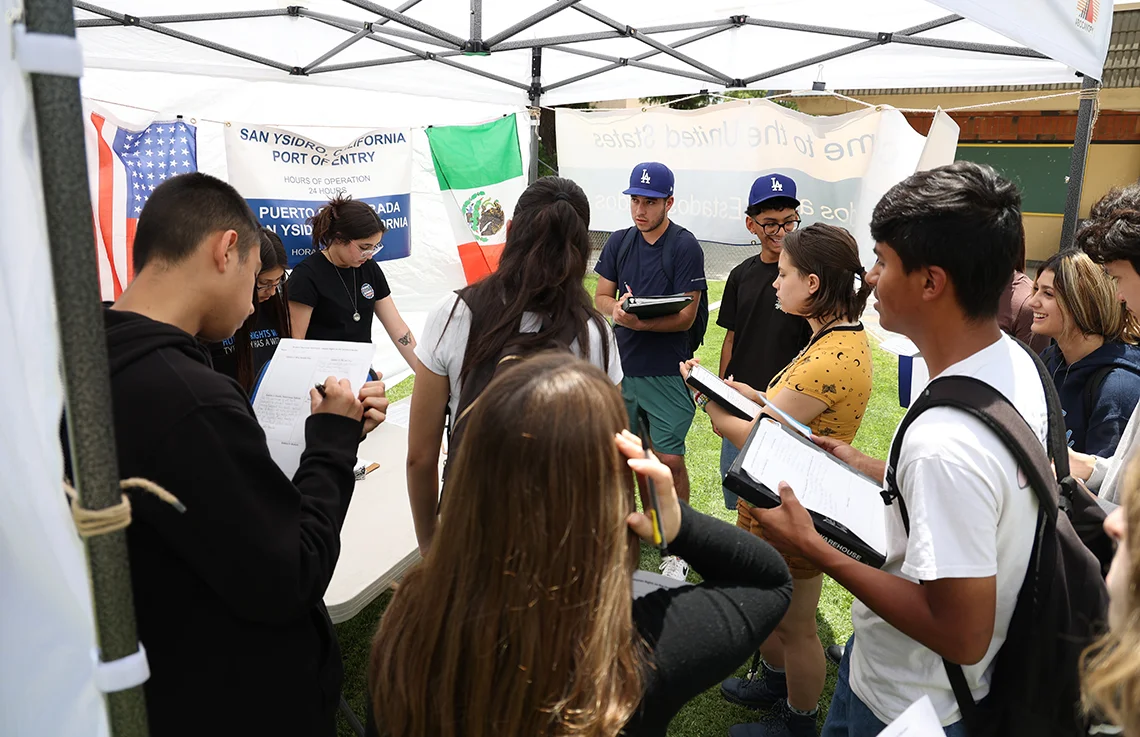
Set up a tent event with up to four human rights-related themes, including an introduction to human rights. Use STF’s Tent Event Resources for instructions on how to set up a tent event, a planning checklist and to help you think through which themes you want feature to get your whole school advocating for human rights.
Develop a Student Bill of Rights and Responsibilities
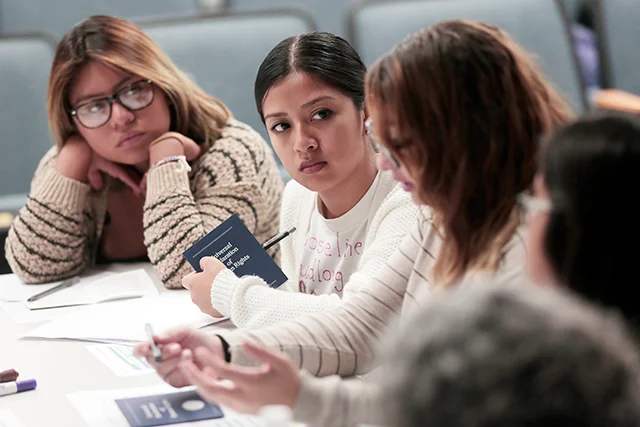
Work with classmates, teachers and administrators to develop a Student Bill of Rights and Responsibilities rooted in human rights. See an example that students from Palisades Charter HS created here. Talk to the STF Team about how to get started!
Host a Film Screening of “A Path to Dignity: The Power of Human Rights Education”
A Path to Dignity: The Power of Human Rights Education presents three stories illustrating the impact of human rights education on school children (India), law enforcement agencies (Australia) and women victims of violence (Turkey). Contact the STF Team to learn more about this opportunity.
Take Action: If You Only Have...
60 seconds
- Bookmark this toolkit for quick access
- Create google alerts for “UDHR” and “human rights”
5 minutes
- Read this Illustrated Version of the UDHR
- Read this glossary of important UDHR vocabulary
- Watch this video to understand the importance of learning about human rights
- Create your pitch for why we should speak up for human rights
30 minutes
- Watch and share Human Rights Watch’s award winning Human Rights 101 videos
- Browse the Human Rights Watch website to learn about current human rights issues our researchers are investigating
- Fill out this questionnaire to take the “human rights temperature” of your school

Educator's Portal - Lesson Plans
For educators interested in teaching students about the Universal Declaration of Human Rights (UDHR), please explore the resources below.
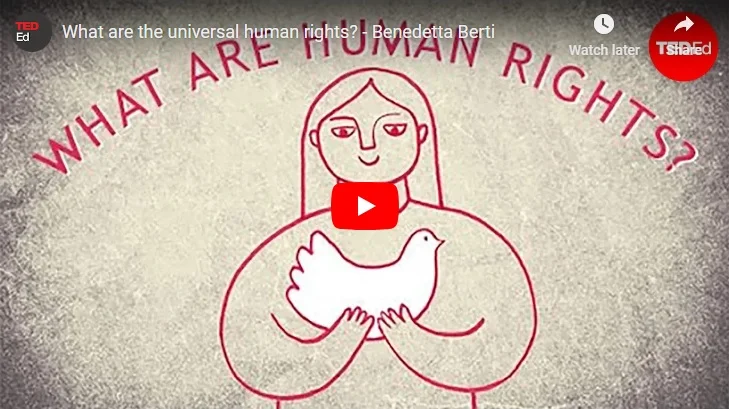
Introducing Human Rights
This TedEd lesson explores the subtleties of human rights. This resource includes a series of questions: what exactly are the basic human rights? Who gets to pick them? Who enforces them—and how?
Subjects: Social Studies, English Language Arts, Literacy
Grades: 9-10
Upholding Our Rights
In this lesson, students familiarize themselves with the UDHR. Students will reflect on how the enforcement of the UDHR can resolve current issues, continue human rights being upheld, as well as end human rights violations.
Subjects: English Language Arts, Science, Social Sciences
Grades: 9-12
The World as it Could Be
This collection of six lessons from The World as It Could Be program is an integration of creative arts and human rights education. It focuses on the UDHR’s connection, to personal lives, community, and global issues.
Subject: Social Studies, English Language Arts, Literacy
Grades: 9-12
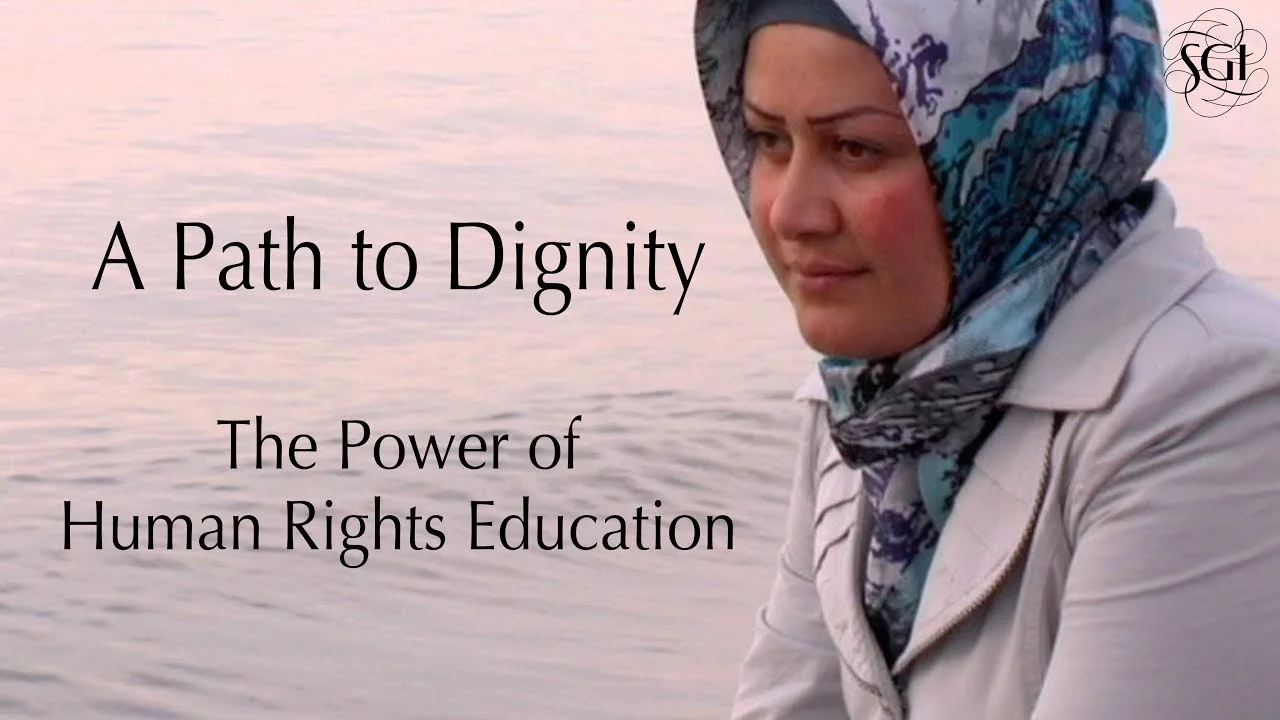
“A Path to Dignity” Film
A Path to Dignity: The Power of Human Rights Education presents three stories illustrating the impact of human rights education on school children (India), law enforcement agencies (Australia) and women victims of violence (Turkey).
Subject: Social Studies, English Language Arts
Grades: 9-12