Convention on the Rights of the Child Toolkit
Millions of children have no access to education, work long hours under hazardous conditions, or have their safety and futures threatened by armed conflict. They suffer targeted attacks on their schools and teachers or languish in institutions, prisons, or detention centers, where they endure inhumane conditions and assaults on their dignity, including physical and sexual assault. These abuses affect their development and may result in a loss of opportunities that are needed for healthy growth. Young and still developing, they may be exploited by the very individuals responsible for their care. (HRW)
In 1989, world leaders made a historic commitment to the world’s children by adopting the United Nations Convention on the Rights of the Child (CRC) – an international agreement on childhood. It’s become the most widely ratified human rights treaty in history and has helped transform children’s lives around the world.
But still not every child gets to enjoy a full childhood. Still, too many childhoods are cut short. It is up to our generation to demand that leaders from government, business and communities fulfil their commitments and take action for child rights now, once and for all. They must commit to making sure every child, has every right. (UNICEF)
Countdown to November 20: Anniversary of the Convention on the Rights of the Child
Day(s)
:
Hour(s)
:
Minute(s)
:
Second(s)
Click on each tab for information and resources:
CRC Fast Facts
- The UN Convention on the Rights of the Child (CRC) is the most ratified international human rights treaty to date. Since its adoption in 1989, 196 countries have ratified the CRC, committing to protect children from violence and exploitation, and ensure their education and healthy development.
- There are 54 articles and 3 optional protocols that address children in armed conflict, the sale of children, and a protocol allowing individual children to submit complains to the UN Committee on the Rights of the Child. Human Rights Watch is part of an international coalition working to draft a 4th optional protocol expanding the right to free education to pre-primary and secondary students.
- There are four General Principles underpinning the CRC:
- The right to life, survival and development;
- Non-discrimination;
- The right to be heard;
- The best interests of the child.
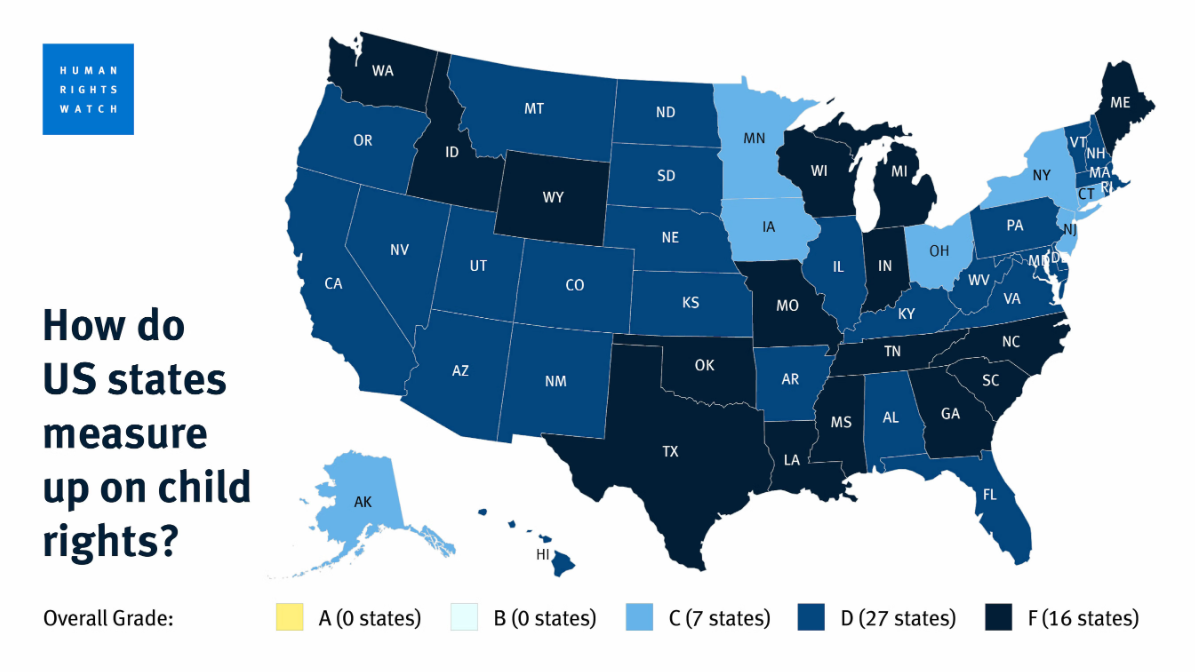
- The United States is the only UN member state that has not yet ratified the Convention. In 2023, Human Rights Watch conducted an assessment of how state laws meet international standards regarding four core child rights issues: child marriage, corporal punishment, child labor, and juvenile justice. We found that most US states are overwhelmingly noncompliant with international child rights standards on these four issues. (HRW)
Educational Resources



On Campus:
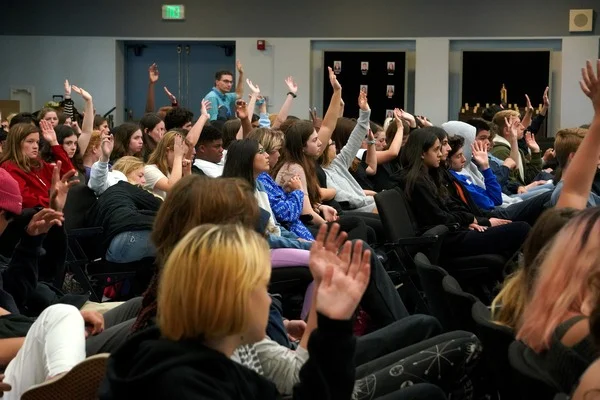
One of the most important places to ensure your human rights are upheld is in your school. STF Chapters will continue their efforts to develop and implement a Student Bill of Responsibilities and Rights that enshrine your rights as children and students within your community.
Other Chapters may want to survey classmates and teachers to see where human rights are discussed on campus and work with allies to embed human rights education across curricula.
Locally:

Advocate with your local government officials (city council, mayor, alderman, etc.) and demand they enshrine the Convention on the Rights of the Child into your city's laws and standards. This could include:
- Adopting the Convention on the Rights of the Child at the local level, ensuring that children's rights are considered when enacting local legislation;
- Passing a resolution acknowleding the anniversary of the Convention on the Rights of the Child (Nov. 20, 1989) on an annual basis; or
- Collaborating with local officials to identify other ways to celebrate and uplift children in your community
In previous efforts, STFers secured commitments from the cities of Culver City, Los Angeles, Santa Clarita and Santa Monica. Students in these cities can return to their City Council and ask for a review to ensure new city ordinances enacted since these resolutions were adopted are uplifting children.
Internationally:
Follow and support Human Rights Watch's efforts to expand the right to education to include free pre-primary and free secondary education by adopting a new Optional Protocol to the CRC. STFers began contributing to this effort in summer 2025 and continue to provide statements of support as needed. Follow HRW's progress on this issue through the Children's Rights Division.
Take Action: If You Only Have...
60 Seconds
- Bookmark this toolkit for quick access
- Create google alerts for "convention on the rights of the child" and "children's rights" to stay current on this action plan
- Follow HRW's Children's Rights Division Director, Zama Neff, on social media (Twitter, BlueSky)
5 Minutes
- Read this glossary of important vocabulary related to the Convention on the Rights of the Child and children's rights in general
- Watch these videos about the importance of children's rights
- Check out UNICEF's timeline of child rights to get a snapshot of the history of children's rights in an international context
30 Minutes
- Check out news and reports from Human Rights Watch's Children's Rights Division to learn about children's rights at risk around the world

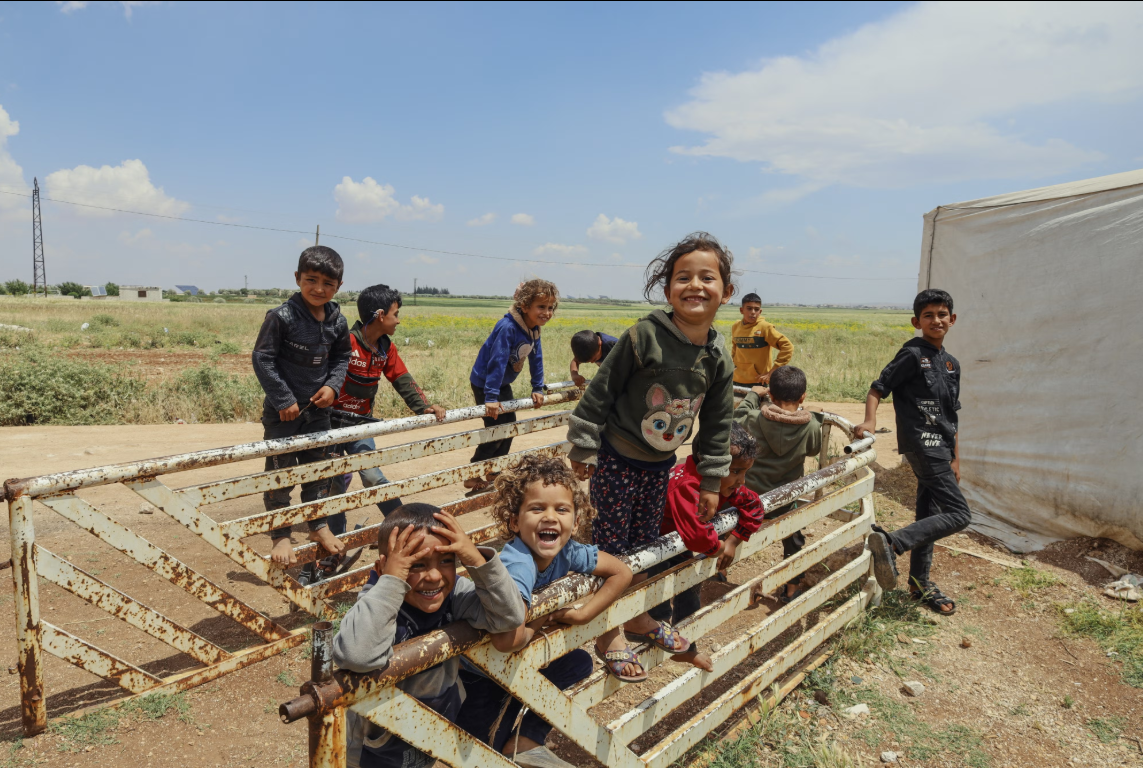
Displaced Syrian children laugh and play among temporary tents set up after the fall of the Bashar al-Assad government near Idlib, Syria, May 15, 2025. Photo by Omar Albaw/Middle East Images via AFP/Getty Images
Each year, Human Rights Watch reflects on progress in children’s rights worldwide. From better access to education to stronger protections in wartime, these are some highlights from 2025.
- New data from the International Labour Organization and UNICEF found 20 million fewer children involved in child labor than in 2020.
- Malawi and Japan both abolished school fees in public secondary schools. Vietnam enacted free tuition for all public school students from preschool through secondary school.
- Brazil passed a landmark law to protect children’s rights online, the first Latin American country to pass a such a dedicated law for children.
- Bolivia, Grenada, Burkina Faso, Portugal, and Kuwait each raised the legal minimum age for marriage to 18. In the United States, the states of Maine, Oregon, and Missouri banned child marriage.
- In September, 92 countries met for the first time to formally consider a possible new international treaty to guarantee free education for all children from pre-primary through secondary school. To date, 60 countries have pledged their support for a treaty.
- Thailand, Czechia, and Switzerland banned all corporal punishment of children, bringing the total number of countries with such bans to 70.
- The United States and Kosovo endorsed the Safe Schools Declaration, a political commitment to protect education during war, bringing the number of countries endorsing the declaration to 122.
- China initiated a subsidy program for families with children under age 3, while Fiji, Japan, Morocco, Türkiye, and Tunisia increased benefits for children, and the United Kingdom announced it will remove the “two-child limit” for families receiving child-related social security support. Such measures can play a powerful role in reducing child poverty: in the UK alone, ending the two-child limit is projected to lift about 450,000 children out of relative low income by 2030.
- The International Criminal Court prosecutor requested arrest warrants against two senior Taliban leaders for serious abuses against women and girls in Afghanistan, citing gender persecution, a crime against humanity.
- The Western Australia state government announced a new reparations program for the “Stolen Generations,” Indigenous children who were forcibly removed from their families under racist policies that began in the early 1900s and lasted into the 1970s.
Children around the world continue to face serious threats to their rights, but these examples demonstrate that real improvements are achievable. (HRW)
Check out these websites and resourcse to learn more about children's rights around the world: