
Dignity in Detention Toolkit
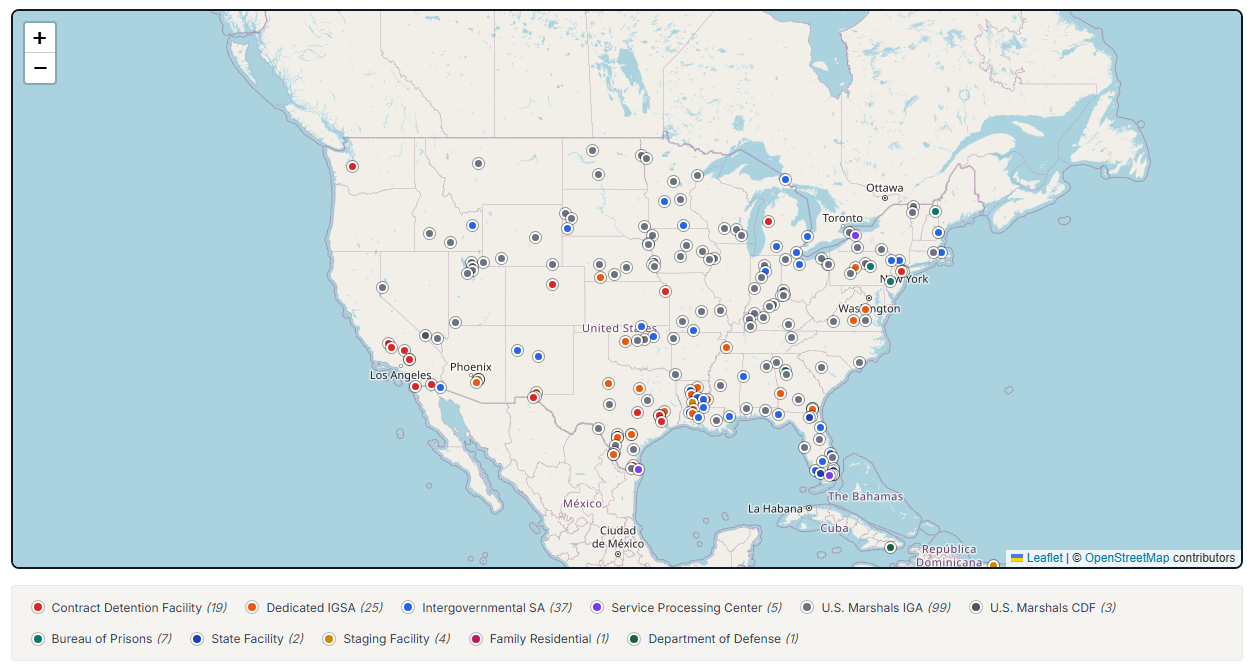
ICE Detention Facility Locator: Searchable directory of every U.S. Immigration and Customs Enforcement (ICE) detention facility — addresses, capacity, average length of stay, and most recent inspection rating. All 203 facilities are plotted on the map above. Map by VisaVerge
The United States operates the largest immigration detention system in the world. Over the last decade, the US immigration detention system has entered a new phase of unprecedented growth. In fiscal year 2025, the US detained more than 310,000 people in more than 200 detention centers, jails, and prisons across the country. As of February 2026, Immigration and Customs Enforcement (ICE) maintains an average daily population of 67,456 people in its detention network, which includes facilities overwhelmingly run by private contractors.
The ICE detention system has operated with a consistent lack of transparency across administrations. Incidents of violence, failures in medical treatment, and abusive conditions of confinement are similarly underreported. Since the second Trump administration took office in January 2025, at least 52 people have died in ICE custody, making 2025 the deadliest year on record for immigration detention, with 2026 currently on track to surpass that total. (HRW)
Click on each tab for information and resources:
Immigration Detention Fast Facts
Since the beginning of the second Trump administration, federal authorities have dramatically increased immigration arrests through workplace raids, neighborhood enforcement operations, traffic stops, and arrests at USCIS field offices, with the stated goal of expanding detention capacity on an unprecedented scale.
- ICE has detained more than 650 children in California. More than 100 of the children detained under Trump were age 5 or under. (EdSource)
- As of February 2026, Immigration and Customs Enforcement (ICE) maintains an average daily population of 67,456 people in its detention network. (HRW)
- As of June 2026, immigrants without criminal records make up 79% of the average daily population in detention centers nationwide. (LA Times)
- More than 43,000 people were booked into detention centers nationwide in June, the highest recorded since President Trump returned to office. (LA Times)
- In the nine months between October 2025 and June 2026, 356,389 people have been deported, compared with 319,980 deportations for the 12 prior months. (LA Times)
-
Death rate in ICE immigrant detention centers more than doubles under Trump. (Reuters)
- The mass expansion of immigration detention was enabled by the One Big Beautiful Bill Act, which allocates approximately $75 billion to ICE over four years. (HRW)
- Reivew this ICE Detention Facility Locator or the Freedom for Immigrants Detention Mapping Project to learn more about immigrant detention facilities in your state.
Educational Resources

Frequently Asked Questions

Glossary

Testimonies

Myth vs. Fact
Additional Reading
Stay caught up on the most recent news releases and reports from Human Rights Watch related to the US Program's Immigration and Border Rights work and Refugees and Migrants globally:
- July 27, 2026: Proposed DHS Work Authorization Rule Threatens Immigrant Domestic Violence Survivors
- July 15, 2026: Trump Administration Scrutinizes Groups Representing Children
- July 13, 2026: Yet Another Death in ICE Custody
- June 16, 2026: US Congress Approves Immigration Funding Despite Abuses
- May 22, 2026: Mental Health Is Another Unfortunate ICE Casualty
- March 20, 2026: US Ramps Up Deportation of Pregnant People
- March 10, 2026: Child in the US Deprived of Hearing Aids during Deportation
- September 19, 2025: US Judge Blocks Expulsion of Guatemalan Children
Federal Level
To support Human Rights Watch's advocacy at the US Federal level, STFers will gather petition signatures to:
- Senate Majority Leader
- Senate Minority Leader
- Speaker of the House
- House Minority Leader
Each Chapter will draft a cover letter and mail their petition signatures to Congressional leaders demanding they provide oversight and accountability to the Department of Homeland Security and their treatment of people caught up in the immigration detention system.
If time, STFers also meet with their state's Congressional representatives to increase pressure and awareness in Congress.
Check out the "Recommendations" tab for additional talking points.
State Level
Depending on the laws governing your state (i.e. if you live in a "sanctuary state"), you can either thank your state representatives for uphold the rights and dignity of immigrants, or you will demand your state's goverment:
- Terminate all agreements between state and local law enforcement and federal immigration enforcement.
- Conduct oversight hearings in public safety committees to investigate the role of state and local law enforcement in federal immigration enforcement.
- Establish independent fora to allow state residents to describe their experiences with immigration policies and detention in your state and to express their policy preferences to their state and local elected officials, and ultimately to their federal elected officials.
On Campus
Ensure there are articles in your Student Bill of Responsibilities and Rights that address concerns faced by immigrant students, teachers and community members. This may include a statement about the rules for allowing immigration law enforcement on campus, or providing "Know You Rights" trainings and resources for the community, etc.
Take Action: If You Only Have...
60 Seconds
- Bookmark this toolkit for quick access
- Create google alerts for "immigration detention", "ICE" and "immigrants in [your community's name]" to stay current on this action plan
- Follow HRW's US Program
5 Minutes
- Read this glossary of important vocabulary related to immigration detention
30 Minutes
- Read HRW's “‘You’re Only Getting Out Deported or Dead’: Abusive US Immigration Detention at Ft. Bliss,”report
- Stay caught up on the most recent news releases and reports from Human Rights Watch related to the US Program's Immigration and Border Rights work and Refugees and Migrants globally
- Reivew this ICE Detention Facility Locator or the Freedom for Immigrants Detention Mapping Project to learn more about immigrant detention facilities in your state.

Event Ideas
Every STF Action Plan comes with advocacy goals. One way to engage your campus community in these advocacy goals is to host on-campus events. Get started with the STF Event Planning Toolkit today!
Events and advocacy should be done throughout the year, but remember, November 20 is the anniversary of the Convention on the Rights of the Child so let's aim to have every school host an event around that date!
Possible events to advocate for Dignity in Detention include:
- Host an experiential tent event with each tent covering a different theme: history of human rights, what is ICE doing, testimonies of what it's like to be held in a detention center, advocacy station
- Put together an artistic exhibit that highlights the conditions in detention centers, including photo, written and video testimonies
- Do classroom presentations explaining what's happening in immigration detention centers around the country/in your state. You can do this as general education or along side a documentary screening
- Host a film screening event
- Give a faculty presentation about the importance of protecting immigrant families in your community
- Draft/update your SBRR to ensure immigrant students, teachers and families are protected when on campus
- Check out STF's Event and Advocacy Ideas list for additional ideas!
In every report, Human Rights Watch makes recommendations for how to improve the human rights concerns addressed. These are just some of the recommendations HRW has made to improve the quality of life for immigrants detained at Camp East Montana.
While the below recommendations are specific to Camp East Montana, they apply to immigration detention centers around the country (and world).
To the US Executive:
Shift Toward Humane, Rights-based Alternatives to Detention
- End the use of Ft. Bliss and other military assets to detain and deport people in US Immigration and Customs Enforcement (ICE) custody.
- Replace immigration detention with community-based case management programs that provide holistic services, including legal aid, housing, and employment assistance, or, as necessary, with the least intrusive forms of supervision and monitoring to ensure compliance with immigration proceedings and removal.
- Direct ICE to refrain to from detaining people participating in the processes authorities have laid out for them, including routine check-ins at field offices, showing up to court hearings, applying for asylum and other forms of immigration relief.
- Release vulnerable populations such as pregnant people, elderly people, and people with serious medical conditions from detention.
Prevent Further Harm and Abuse, and Safeguard the Wellbeing of Immigrants
- To the maximum extent permitted by law, direct ICE to use immigration detention only as a measure of last resort, for the shortest possible duration.
- If detention cannot be avoided, ensure access to reasonable accommodations and the necessary medical treatment to safeguard health and maintain dignified conditions.
- Prohibit the use of solitary confinement in immigration detention facilities.
To the US Congress
Remedy and Prevent Ongoing Harm and Rights Violations in Immigration Detention
- Eliminate mandatory immigration detention. Ensure that any decision to detain a person is based on an individualized assessment subject to judicial review and prioritization of alternatives to detention.
- Immediately reduce harms by passing binding detention standards that ensure constitutional treatment of detained people.
- Hold ICE accountable for meeting specific standards outlined in the National Detention Standards (NDS) for all non-dedicated facilities, and the Performance Based National Detention Standards (PBNDS) for all ICE custody dedicated facilities with regard to provision of care and data reporting.
Ensure Congressional Oversight of Detention Facilities
- Ensure all congressionally designated independent oversight bodies have adequate funding and the capacity, staff, and resources needed to effectively monitor detention conditions, ensure detainees have access to adequate complaint procedures, investigate abuses, and ensure accountability for violations of detainees' rights.
- Immediately conduct robust oversight of ICE detention, including through use of subpoena authority and investigations into the conditions documented in this report and asking the Government Accountability Office (GAO) and the Congressional Research Services (CRS) to investigate immigration detention conditions.
- Establish a special or select congressional committee to investigate deaths in ICE custody, healthcare services, including mental health services, and the use of solitary confinement in immigration detention.
- Pass legislation requiring timely and appropriate healthcare, including mental health services, for all detainees, with oversight mechanisms to prevent neglect and abuse.
- Pass legislation that prohibits the use of solitary confinement in immigration detention facilities, including for people with psychosocial disabilities (mental health conditions), as its prolonged use constitutes cruel, inhuman, or degrading treatment and can amount to torture.
To the UN Committee Against Torture, the UN Human Rights Committee, the UN Special Rapporteur on Torture, the UN Special Rapporteur on the Human Rights of Migrants, and the UN High Commissioner for Refugees
- Investigate the allegations of ill-treatment in US immigration detention in this and other reports.
- Consider fact-finding visits and regular monitoring of Camp East Montana and other ICE detention facilities.
- Call on the US government to comply with the UN Standard Minimum Rules for the Treatment of Prisoners (the Mandela Rules) and specialized standards, such as UNHCR ExCom Conclusion 44 on the Detention of Refugees and Asylum-Seekers and UNHCR’s Detention Guidelines.
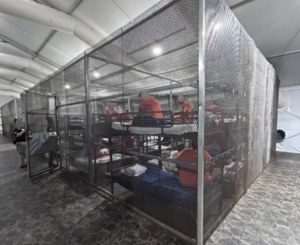
Detainees at the Florida immigration detention center known as “Alligator Alcatraz” in January 2026.
Photo by Department of Homeland Security Office of the Inspector General
People held in the immigration detention camp at the US Army’s Fort Bliss in El Paso, Texas have experienced serious abuse, Human Rights Watch and the American Civil Liberties Union (ACLU) said in a joint report released today. People detained at Camp East Montana have experienced indiscriminate beatings, life-threatening medical neglect, coercive removals to unfamiliar “third countries,” and, in some cases, experienced conditions of confinement that may amount to enforced disappearance.
The 84-page report, “‘You’re Only Getting Out Deported or Dead’: Abusive US Immigration Detention at Ft. Bliss,” documents conditions at the largest immigration detention facility in the United States. (HRW)
Fast Facts
- Camp East Montana is the nation’s largest immigration detention center. It is located on the grounds of Fort Bliss, a US military base with headquarters in El Paso, Texas.
- During World War II, Fort Bliss was one of several Texas military bases used as an incarceration camp for people of Japanese descent, as well as some German and Italian immigrants. In 2021, under the administration of President Joe Biden, Fort Bliss was also used by the US government to detain unaccompanied children who arrived at the US-Mexico border.
- The detention camp has the capacity to hold up to 5,000 people and consists of five “soft-sided” tent-like structures that house detained people in penned enclosures... with up to 72 people housed in each pod. Each pod contains six toilets and six showers for up to 72 people.
- By August 14, 2025, the the facility held 46 people. By the end of September 2025, nearly 3,000 people were confined there. The population peaked at 3,880 in January 2026. Researchers interviewed 80 people, including 71 while they were detained at Camp East Montana, 4 family members, and 5 legal service providers from October 2025 to June 2026.
- Detained were beaten by guards, denied necessary medical care, and prevented from contacting family members or lawyers. In some of the cases documented, these practices amounted to enforced disappearance under international human rights law.
- Detained people described overcrowded housing areas, bathrooms covered in feces and urine, and living quarters flooded with dirty water and dust.
- In April 2026, an ICE internal investigation identified violations of federal detention standards, including unreported uses of force, medical neglect, failures to conduct required suicide and wellness checks, inadequate sexual abuse prevention measures, unanswered grievances, and systemic failures to process detainee requests for assistance.
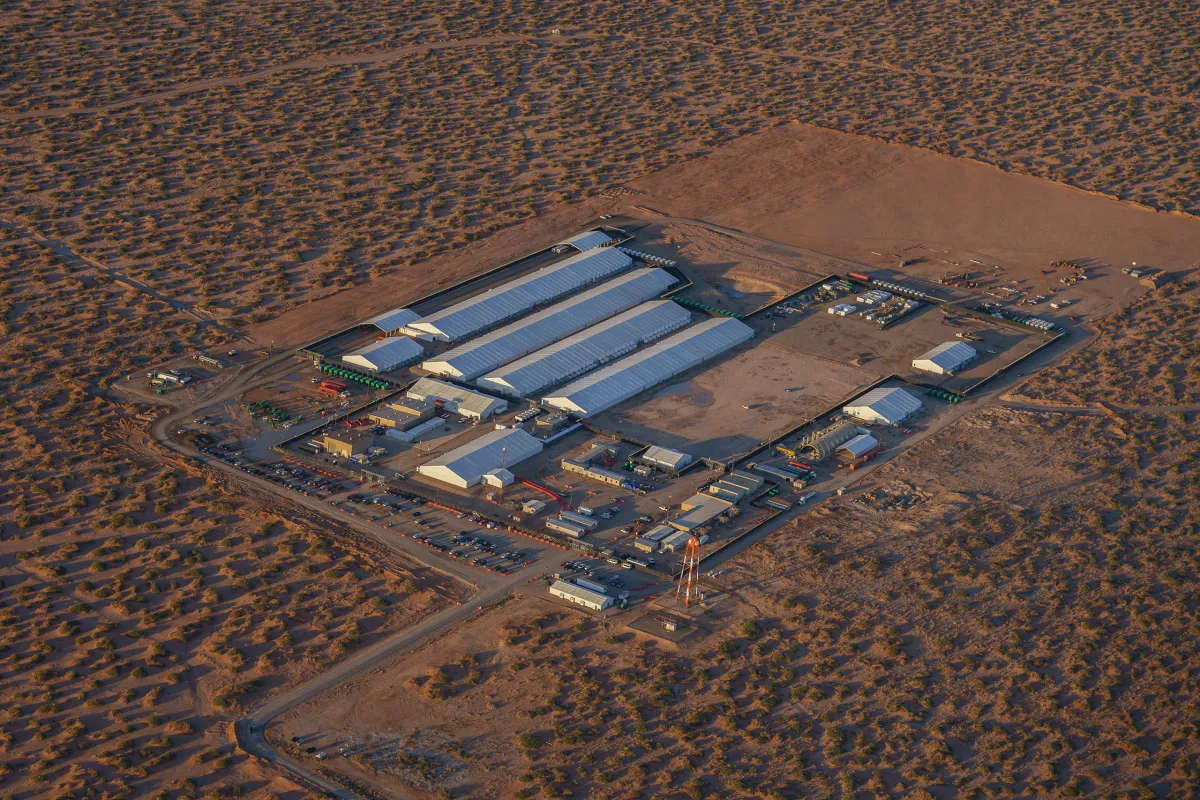
An aerial view of the Camp East Montana detention facility at Fort Bliss on Sept. 7, 2025. Photo by Paul Ratje for The Texas Tribune